Being told you have diminished ovarian reserve (DOR) can feel overwhelming. Many women immediately begin asking the same questions. Will IVF work? Have I left it too late? Is there anything I can do to improve my chances?
A newly published systematic review and meta-analysis offers encouraging news. By analysing the results of 11 randomised controlled trials involving 885 women, researchers found growing evidence that acupuncture has the potential to improve several important IVF outcomes for women with diminished ovarian reserve undergoing IVF or ICSI.
The findings add to a growing body of research supporting acupuncture as a complementary treatment alongside modern fertility care. Read more
When it comes to fertility, balance within the body’s hormonal system is one of the essentials. One of the most important factors regulating this system is the hypothalamic–pituitary–ovarian (HPO) axis — the communication pathway between the brain and the ovaries that regulates ovulation, hormone levels, and reproductive health. Ovarian disorders (like Polycystic Ovary Syndrome or Premature Ovarian Insufficiency) happen when this communication network is unbalanced. A study publishsed in Journal of Integrative Neuroscience has explored how acupuncture helps to restore this delicate balance by directly influencing the HPO axis.
The Study at a Glance
Researchers investigated how acupuncture affects the HPO axis. The study measured key reproductive hormones to understand how acupuncture regulates them.
In participants with dysfunctional or irregular ovulation, acupuncture was found to modulate the neuroendocrine activity of the HPO axis. Specifically, it helped normalise the release of GnRH from the hypothalamus, which in turn improved the balance of FSH and LH secreted by the pituitary gland. This hormonal adjustment supported better ovarian function and more regular ovulatory cycles.
What the Findings Show
Acupuncture helps restore ovarian function by re-balancing the HPO axis through two main pathways:
1. Adjusting Chemical Messengers (Neuroendocrine Regulation)
Acupuncture works by influencing the release of key hormones and nerve signals produced in the brain (hypothalamus) that control reproduction, including:
Reproductive Signal Control: Acupuncture helps regulate crucial reproductive signals, such as GnRH (Gonadotropin-Releasing Hormone), which, in turn, influences the release of LH (Luteinizing Hormone) and FSH (Follicle-Stimulating Hormone). By doing this, acupuncture may promote follicle development and ovulation.
Key Peptides: It specifically targets neuropeptides like kisspeptin and neuropeptide Y (NPY), which are critical for maintaining reproductive homeostasis. For instance, acupuncture can stimulate the release of kisspeptin to activate the HPO axis.
Mood and Nerve Chemistry: Acupuncture also modulates neurotransmitters (serotonin, dopamine, GABA). This regulation may help modulate emotional states and HPO axis function.
2. Regulating Nerve Communication (Neural Pathways)
If you’re trying to conceive for a while, you probably already know how much effort, planning, and hope can go into every cycle. But here’s something you may not have realised: even the best-quality embryos can fail to implant if your womb isn’t fully ready. It’s not just about the quality of your eggs. It’s equally about how prepared your body is to welcome and nurture an embryo. This critical factor is known as endometrial receptivity (ER). When ER is compromised, even embryos of the highest quality can fail to implant, making pregnancy elusive.
A new review published in Frontiers in Physiology in 2025 analysed dozens of studies and shed light on what we as TCM fertility specialists have long recognised: acupuncture may help support uterine receptivity.
What is Uterine Receptivity?
Uterine receptivity – often termed endometrial receptivity – is the state in which the lining of your uterus (the endometrium) undergoes carefully timed changes to allow a blastocyst (early embryo) to attach and begin to implant into the uterine tissue. It’s the brief window when the uterus is ready for implantation.
Just like planting a seedling best works in spring, your uterus has a short “planting season” each month when everything is perfectly balanced for the embryo to stick and start growing. Only when uterus is ready and ready at precisely right time, the embryo can attach to it and begin the amazing journey of growing into a baby.
A recent controlled study sheds valuable insight into how acupuncture and AMH (Anti-Müllerian Hormone) levels may be connected, especially in women approaching later reproductive years. This research adds to the growing body of evidence suggesting acupuncture could help support ovarian reserve, fertility preservation, and reproductive potential.
While the study was designed to evaluate the effects of acupuncture on insomnia during perimenopause, the findings may have secondary relevance for those interested in ovarian reserve and fertility preservation.
The study compared a group receiving the traditional Chinese acupuncture method of “regulating liver and nourishing blood” with a control group taking alprazolam for sleep disturbances. After four weeks, the acupuncture group showed not only improved sleep, mood, and quality of life, but also significant hormonal changes. Notably, levels of Follicle-Stimulating Hormone (FSH) decreased, while Anti-Müllerian Hormone (AMH) and oestradiol (E2) levels increased. These are the hormones commonly used to evaluate ovarian reserve and reproductive potential.
Elevated FSH or reduced AMH levels are often indicators of diminished ovarian reserve and age-related fertility decline. That participants who received acupuncture treatments experienced a reduction in FSH and, more surprisingly, signs of increases in AMH is especially noteworthy. AMH levels are generally expected to decline with age, and there are currently no widely accepted interventions known to reverse this trend. In clinical settings, some practitioners have also observed similar improvements in AMH after regular acupuncture sessions.
These findings point to the potential of acupuncture as a supportive therapy for those facing age-related fertility challenges or exploring fertility preservation options. Rather than simply addressing symptoms, acupuncture may contribute to creating a hormonal environment more conducive to ovulation, conception, and long-term reproductive health.
For individuals looking to improve ovarian reserve, preserve fertility, or support natural conception, especially where AMH levels are a concern, acupuncture offers a promising complementary option. Its ability to influence hormone levels – especially AMH and FSH – makes it a compelling addition to holistic fertility and fertility preservation strategies.
This research brings hope to many trying to conceive later in life and to those actively exploring ways to preserve their fertility, reinforcing the role of acupuncture in enhancing reproductive wellness through natural, hormone-supportive mechanisms. Read more
Picture this: a lovely couple nervously sits in front of me during their first fertility acupuncture consultation. They want to know how acupuncture can help with male factor infertility.
Due to the male factor infertility diagnosis, the couple had already gone through three cycles of IVF with ICSI, recommended by a reproductive endocrinologist. Sadly, none of these cycles resulted in viable embryos. The gentleman’s eyes fill with tears as he shares his story.
He says, “I’m super healthy! I don’t smoke, drink or eat junk food, I work out regularly. Still… Nothing. We’re willing to try anything at this point.”.
Have you been labelled as a poor IVF responder? Is there a way you can up your chances of making a baby? You know there are not many options. Can acupuncture help?
IVF is the numbers game. The important part of IVF is for your ovaries to safely produce as many follicles as possible. And poor IVF responders’ ovaries, as the name suggests, don’t grow many follicles. This means these IVF cycles are often cancelled. If you are lucky you may end up with a couple of oocytes. Furthermore, those eggs are less likely to turn into embryos.
The poor ovarian response (POR) is a diagnosis no one wants when trying to conceive. IVF clinics can’t do much to help you respond better. There are several IVF protocols you can try, but unfortunately, they are seldom successful.
So, what does “poor IVF responder” mean? Let’s take it apart.
Can fertility acupuncture help with depression? It may sound like a strange idea, but the two may be more connected than you think. Let’s have a closer look.
Relax and it will happen, they say. Does your stress contribute to infertility or does the emotional rollercoaster of not being able to conceive lead to stress and depression? Stress and infertility – a classic Catch-22?
Many couples dealing with infertility experience increased levels of anxiety and depression, which can put a strain on their relationship and even affect their ability to conceive. Dealing with infertility causes significant distress.
Unmanaged depression can have a negative effect on a couple’s relationship. It can affect the libido in both partners, and it even has a toll on sperm quality. No surprise that men diagnosed with major depression are less likely to conceive a child. And women with severe symptoms have 38 per cent fewer conceptions each month.
So what can you do to address this? Are there any safe treatment options?
Many studies have explored and showed the negative effects of antidepressants on pregnancy and on health of a developing baby. We are not yet certain how these drugs affect fertility.
For instance, women undergoing medical treatment for depression are more likely to miscarry. The same study links the use of antidepressants and male infertility. If you are in a position to choose, discuss non-pharmaceutical treatment with your doctor. For those looking for a safe and effective alternative, fertility acupuncture may be worth considering.
How to overcome your depression naturally when trying for a baby
There are a few effective non-drug interventions. We recommend a combination of
Get your garden ready for your little seed! You may have heard that you need to prepare the soil before planting, and the same goes for getting your body ready for pregnancy. The uterine lining (endometrium) is where your future baby will attach, get nutrition, and grow. Furthermore, a healthy uterine lining can help reduce the risk of early miscarriage.
So, what’s the key to fertile soil for the baby? The ideal endometrial lining before the implantation should be about 8mm in thick and have a good blood circulation. Ideally, it will have a three-layer pattern, which it can be seen on the ultrasound. Women with better blood circulation in the endometrium have more live births with IVF.
Developing embryo relies on endometrial lining for nutrients until at least the tenth week of pregnancy. Uterine linings also regulates placental growth and differentiation.
However, treatments that optimise your endometrium are limited, and we don’t yet know of any lifestyle interventions that are proven to help. That’s where acupuncture comes in.
I recently came across this little study showing acupuncture’s anti-inflammatory effects for pelvic inflammatory disease.
Pelvic inflammatory disease (PID) is acute inflammation in your reproductive organs. It is a complication often caused by STIs, like chlamydia or gonorrhea. With a recent rise in reported STIs cases in New Zealand, there is an increased risk of women developing the pelvic inflammatory disease.
It’s concerning as you may not realise you have PID. Symptoms may be mild, or you may not feel any difference at all. However, if you have symptoms like
Do you find yourself scrolling through endless pages of conflicting advice on a fertility diet? Do you feel like after all that googling you haven’t found the answer?
Is dairy good or bad for fertility? Pineapples? Gluten? Go vegan? What about the Keto diet?
Dealing with unexplained infertility can be incredibly challenging, especially because you don’t know the reason behind your struggles to conceive.
While lifestyle changes, timed intercourse, and medical treatments like Clomiphene citrate, intrauterine insemination (IUI), or in vitro fertilization (IVF) are commonly recommended by your general practitioner or reproductive endocrinologist, there may be other options to explore. In recent years, acupuncture has become an increasingly popular complementary treatment for couples experiencing unexplained infertility. Here we will analyse the reasons why acupuncture maybe your best option.
What role does acupuncture play in treating unexplained infertility?
At our clinic, we have seen firsthand the benefits and positive results that reproductive acupuncture can bring to couples struggling to conceive. In fact, we have witnessed some patients who had previously tried other treatments for for many years, conceive naturally under our care.
However, acupuncture research is underfunded and methodologically/technically challenging, therefore there are only a few research papers that specifically explore unexplained infertility.
So understandably, I was excited to see a paper that took on the challenge and shed light on acupuncture’s potential for unexplained infertility.
Stress affects your fertility. We can’t ignore this fact any longer.
Furthermore, long-term stress can reduce your IVF success. UK scientists measured cortisol levels in women undergoing IVF. They took samples of hair and saliva. Hair sampling allows analysis of cortisol over the preceding 3–6 months. While saliva sample shows immediate stress levels. Results were eye-opening. Women exposed to chronic stress were 27% less likely to conceive with IVF.
How many acupuncture sessions do you need to have a significant impact on stress?
Is it realistic to think that a single acupuncture session can reduce the cumulative effects of stress that has happened over a longer period, say 3-6 months?
A recent study led by Dr Sutton explored this question. They compared a month of regular acupuncture with one session on the day of embryo transfer. Acupuncture on the day of embryo transfer is often recommended by reproductive endocrinologists.
To no surprise women who had several acupuncture sessions felt more relaxed. Unfortunately, researchers didn’t further explore if acupuncture dose has an impact on pregnancy rates.
When you decide to have a family, you want to get pregnant fast. How can you speed up your fertility journey? Does it feel like you have tried everything? But have you?
Recently I found a fertility acupuncture study from Australia, which has some good tips.
What we know about fertility acupuncture mostly comes from the studies about IVF. In contrast to IVF research, general reproductive acupuncture studies are hard to come by. While we see many IVF patients, about 50% of our couples are trying to conceive naturally, in the privacy of their homes. So studies discussing Chinese Medicine treatment for fertility without IVF are interesting to us and our switched-on patients.
Can you actually get pregnant faster without IVF?
This Australian study explored the effect of acupuncture on fertility awareness and regularity of your cycle. But what they actually discovered will surprise you.
Ovarian reserve is a major factor predicting outcomes in fertility treatments such as IVF. Recent studies suggest acupuncture may help. In this post we will explore what the evidence says.
What is “low ovarian reserve”?
“Low ovarian reserve” generally refers to situations when:
Anti-Müllerian hormone (AMH) levels are reduced – this is the most common way to diagnose it by IVF clinics
There is poorer response to stimulation in IVF, meaning fewer eggs retrieved
Antral follicle count (AFC) is low (via ultrasound)
These markers are commonly used by fertility specialists to predict how ovaries may respond in IVF cycles.
In this study, researchers investigated how acupuncture influenced reproductive potential in women who had low ovarian reserve. They used a kind of acupuncture with no needles, where very gentle electric impulses are used to stimulate acupuncture points. This study has shown improved the hormone levels including AMH.
Key findings
Researchers observed increased number of eggs collected with IVF. The embryo quality was also improved. Consequently, women who had acupuncture had better IVF pregnancy outcomes.
Hormone levels improved in TEAS and AEC groups: increases in AMH and AFC; decreases in FSH; improved FSH/LH ratio.
Infertility Acupuncture info NZ
Egg retrieval: More oocytes retrieved in TEAS and AEC than in placebo or control.
Infertility Acupuncture info NZ
Embryo quality / transfer numbers: Higher number of embryos transferred and better embryo quality in treatment groups.
Infertility Acupuncture info NZ
Pregnancy rates: Clinical pregnancy rate in the TEAS group was markedly higher than in the other three groups.
The study was published in The Journal of Obstetrics and Gynaecology Research.
Summary
Low ovarian reserve can make fertility treatment more difficult. Early evidence shows acupuncture may support ovarian reserve and improve IVF outcomes, though more research is needed.
How does reproductive acupuncture compares to the medication at improving ovulation?
One of the causes of anovulation is luteinised unruptured follicle syndrome (LUFS).
LUFS affects 5%-10% of healthy women and 25%-43% of women with infertility. This syndrome is more common among women diagnosed with endometriosis.
Most commonly LUFS is diagnosed during a series of ultrasound scans.
In women with LUFS, the dominant follicle will grow bigger than usual (up to 4 centimeters). The follicle will undergo the luteinisation process, but it will not rupture during the midcycle to release the mature egg. Progesterone levels will increase as if you have ovulated. Your endometrium will undergo premenstrual changes. In other words, you won’t be able to see any difference in your period. The menstrual flow will be no different from a healthy menstrual cycle. But, obviously, if the egg is not released, and if you have LUFS it is not, pregnancy cannot happen.
There is a clear explanation of why some women get LUFS. The main treatment for it is ovulation induction with hCG hormonal injection or Clomiphene. These treatments are a risk of hyperstimulation syndrome and other side-effects.
Does acupuncture offer a treatment alternative to anovulation?
A recent literature review on acupuncture’s effect on LUFS has been published in the Journal Of Acupuncture and Tuina Science. And if offers a safe and effective alternative. Read more
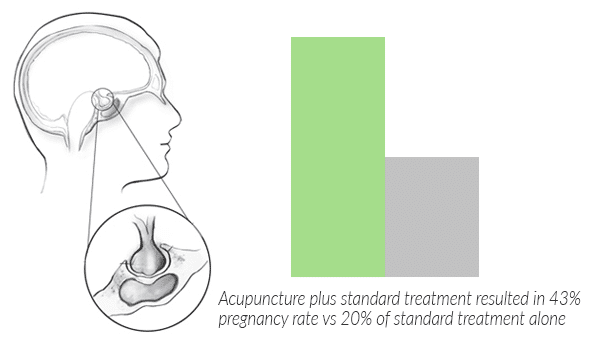
Hyperprolactinemia can be a significant obstacle for women trying to get pregnant, and reproductive acupuncture may be one way to address the condition in some women. Previous research has shown that acupuncture influences prolactin levels in women undergoing IVF. We have studies showing acupuncture can reduce prolactin levels (auricular acupuncture using NADA protocol).
This study is interesting because the researchers were looking at natural conception rates, and women who had acupuncture treatment showed a significant difference – they were more fertile. Acupuncture plus standard treatment resulted in 43% pregnancy rate vs 20% of standard treatment alone. Bromocriptine has some nasty side-effects, including dizziness, nausea, confusion, even hallucinations and uncontrolled body movement. Women undergoing acupuncture treatment had a much better response to the drug but also had fewer side-effects.
Obviously, this is a small study; and further research looking into hyperprolactinemia and acupuncture are needed. The abstract of the study is below.
Effects and mechanisms of acupuncture and moxibustion on reproductive endocrine function in male rats with partial androgen deficiency.
Ren Y1, Yang X1, Zhang Y2, Wang Y1, Li X1.
Author information
Abstract
OBJECTIVES:
Partial androgen deficiency of the aging male (PADAM) is characterised by a deficiency in serum androgen levels. Both electroacupuncture (EA) and mild moxibustion (MM) can raise serum testosterone levels in PADAM. We investigated the mechanisms underlying the use of EA and MM in a rodent model of PADAM. Read more
Can acupuncture help 35+ year old pregnant women reduce pregnancy risks?
Women of this age, are a high risk for developing stillbirth and fetal growth restriction among other complications.
This study, published in Journal of Physiology, researchers from the University of Manchester, UK concluded that the blood flow to placenta may be the reason for increased risks. Acupuncture increases the blood flow to uterus. Use acupuncture in pregnancy as a preventative measure to reduce the risks for the developing baby.
Acupuncture helps to normalise both ovarian volume and AMH in PCOS patients. These changes are beneficial for fertility.
Both acupuncture and exercise help to normalise overactive sympathetic nervous system in PCOS patients. Acupuncture, however, is much more effective. Furthermore, as shown by this study, exercise has no effect on AMH nor ovarian volume.
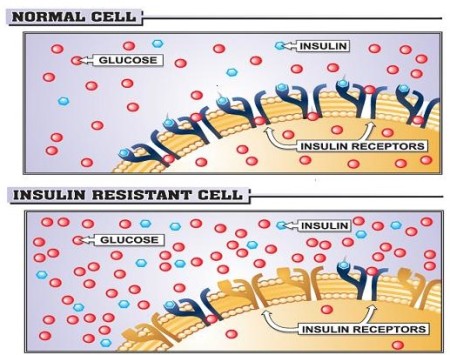
PCOS can improve with acupuncture treatment. More research looks into the mechanism of it. One of the lead researchers in PCOS and acupuncture Dr Elisabet Stener-Victorin from Sweden has long suspected that acupuncture may play a role in regulating blood glucose levels and helping with insulin resistance. Insulin resistance is one of the features of PCOS. This study put the theory to test.
The study revealed acupuncture increases whole-body glucose uptake during and after stimulation in women with polycystic ovary syndrome. See the abstract and a full text of the study below.